
Converter Station WTS
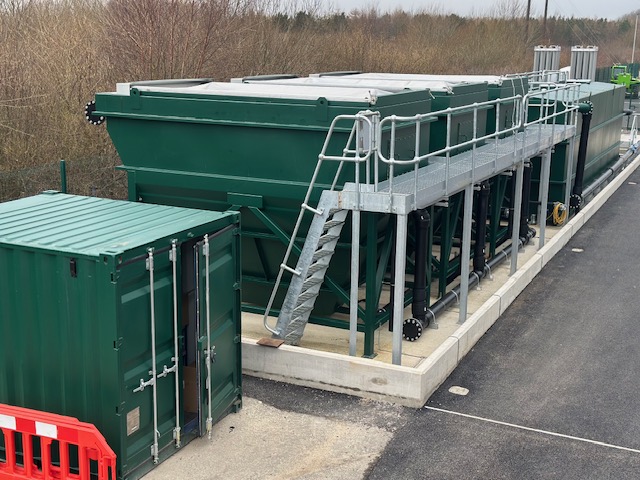
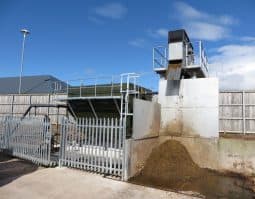
The project involves the installation of 720km of subsea cables, 10km on the onshore cables and the construction of converter stations. The onshore converter stations will be handling the AC to DC and vice versa to feed the national grids. The converter process generates undesirable heat which requires continuous cooling to avoid overheating in the converters. Pollution control were in involved in the design manufacturing and installation of a compete water treatment system (WTS) At the UK converter station built by Hitachai energy to treat 200m cubic meters hour throughput.
Installation Of An Effluent System For A New Mayonnaise Factory

Pollution Control has recently designed, manufactured and installed a complete dissolved air flotation (DAF) based system to treat the effluent from a new mayonnaise factory. The DAF module was part of a complete effluent plant that included mixers, tanks, dosing and gross solids screening, all controlled by a PLC controller.
More Groundhog Slurry Separators Installed In Dairy Farms With Sand Laden Slurry
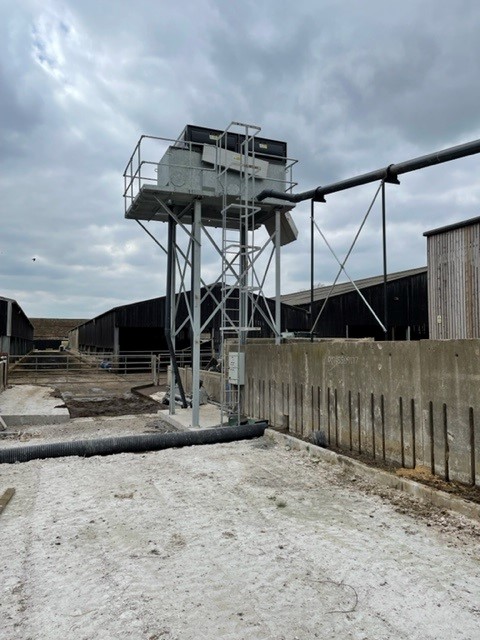
Pollution Control recently installed three more groundhog model 1200 slurry separators to add to the impressive list of separators working successfully on sand-laden slurry. In addition, the simple design principle requires very little maintenance, ensuring minimum parts come in contact with the slurry so there is no costly rebuild. Working countrywide, the installations were in Cornwall, Hampshire & Monmouthshire.
Design and Supply of Lamella Clarifiers and Associated Equipment for Export.

LC50 Lamella Clarifiers Pollution Control has recently exported three LC50 lamella clarifiers, chemical dosing systems and pipe flocculators to New Zealand. The clarifiers will be used in the growing rental sector to filter silts and solids from groundwater construction sites. The remit was to supply lamella clarifiers that could be quickly and easily installed on-site with minimum installation. Pollution Control designed a skid-based system with a collapsible safety handrail and access ladder system. This would allow the clarifier to be easily loaded, transported, and fully operational shortly after arrival at the site. Due to the shipping cost, the clarifiers were designed to fit inside a high-cube shipping container. Owing to the rigours of the rental market, a full two-pack protective paint system was applied both externally and internally. This will provide the client with years of service with minimum maintenance. If you have any questions or enquiries about our Lamella Clarifiers, please don’t hesitate to get in touch with our friendly team via the contact form on the page or contact us page, or you can give us a call direct at +44 (0) 1772 620 066, and we will help as much as can.
Design and Supply of a Containerised Sewage Treatment System for the British Foreign & Commonwealth Office (FCO)

Eco-n-Saf System Installation Pollution Control has recently supplied a bespoke containerised eco-n-saf system to treat all the wastewater at the British Embassy in Kabul, Afghanistan. The technical works manager at the Embassy requested that the system be an above-ground modular containerised design. This is because the sewage treatment plant must treat a maximum flow of 35m³ daily. It also must be easy to install and movable for rapid de-commissioning & re-commissioning. The wastewater comprises on-site accommodation (toilets, showers, etc.) and laundry. In addition, the treated effluent was to be used for irrigation. All sewage is held in a cesspit and periodically removed off-site by a tanker. The new containerised system included a primary/balance chamber, three eco-saf bio cells, a lamella clarifier and an integral controls room. The bespoke design includes solids reduction, bod reduction and final lamella clarification with a reduction of total-n. Containerised Sewage System The containerised system was supplied to iso shipping container dimensions c/w ISO container locking mechanism. Due to the harsh transport and site conditions, a full high-quality two-pack protective paint system was applied internally and externally. Due to the difficulty of sending engineers to Kabul for the installation & commissioning, all external connections were simplified to ensure a true ‘plug & play’ system. The on-site engineer spent time at our facility for training and visited a local site with one of our engineers to experience the service and maintenance of a similar system.
Reducing Effluent Strength With A Re-conditioned SAF
Reducing Effluent Strength With A Re-conditioned SAF Designed to treat the effluent on site to acceptable levels for disposal to Welsh Water works Gross solids screened out of the effluent with Groundhog Standard and Super-Dry Separators prior to biological treatment Reduction in COD of 84% and Suspended solids of 75% mean massive reductions on trade effluent charges Above ground installation that reduced civil cost and installation time scale Re-Conditioned ex-hire system Low operation and maintenance cost. Payback would be expected within 2 years Project Description Menai Meats were continually failing their COD and S/S consents (with the threat of closure) as they had no facilities on site to biologically reduce the strength of their effluent. To screen out the gross solids from the effluent they have had Groundhog Separators installed since 1995. Pollution Control supplied a re-conditioned (ex-hire) high performance modular Eco-SAF biological system comprising of: Mechanical brush screens (Groundhog Standard and Super-Dry Seperators) for solids screening Primary settlement (existing) Hydraulic flow control Up-flow Bioreactor based on Submerged Aerated Filter (SAF) technology Flow 110m3/day Maximum COD 5270mg/l Maximum S/S 840mg/l Max hydraulic loading 12m3/hour Design flow 0.8l/s The on-site effluent treatment system is to treat the site wastewater to the minimum trade effluent quality as follows: Parameter Unit Permitted Discharge Achieved discharge COD (settled) mg/l 3000 800-900 BOD (5 day settled) mg/l 1200 300-360 Suspended solids mg/l 120 200-250 Preliminary Treatment Comprising of the following elements: Mechanical screening with two existing Groundhog Separators Pump station c/w Duty/Assist set back vortex impellor submersible pumps Existing concrete reception pits Secondary Treatment The Eco-SAF module – the essential biological stage where bacterial microorganisms are cultivated and actively consume the suspended organic material found in the decanted liquid from the primary process. The aerated cells are equipped with a fine-bubble aeration system distributing the oxygen required by the heterotrophic bacteria to grow. Oxygen is supplied to the air diffuser system by side channel blower that requires minimum maintenance. The module is a series of aerated cells and anoxic zones. The aerated cells are also furnished with fully submerged bio-film growth media to ensure that the microorganisms have a substantial area for growth and a stable environment. Full floor coverage with the aeration diffusers ensures there is maximum oxygen transfer and there are no ‘unaerated’ dead zones as in circular tank designs. The Eco-SAF system was selected for the following reasons: Predictable performance Lower operation and maintenance costs No interruption to the process whilst servicing the aeration system Modular design that can be added if production is increased Better whole life cost with payback within 2 years Easy installation with minimum excavation required Life expectancy of over 20 years with minimum maintenance No internal moving parts Easy to de-sludge Manufactured to Quality Management System ISO 9001 Download the PDF here
Sewage Treatment Plant For New Power Station
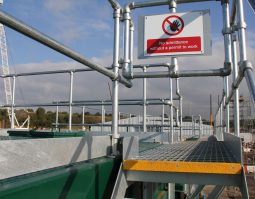
Sewage Treatment Plant For New Power Station Designed to treat wastewater from a workforce population equivalent of 800pe with no option to connect to the mains sewer network New Gas turbine power station constructed at Carrington-Manchester by Duro Felguera and GEC Alstom– Build time approx. four years Servicing and De-Sludging provided by Pollution Control. Above ground installation that reduced civil cost and installation time scale Permanent Eco-SAF system (65pe) also supplied for when the Power station was operational Project Description The Carrington STP is of the packaged type plant design and is based on our high performance modular Eco-SAF biological system comprising of: Inlet pump chamber & grease/oil/fat (FOG) Separator Primary settlement c/w Manual bar screen Hydraulic flow control Up-flow Bioreactor based on Submerged Aerated Filter (SAF) technology Final clarification in a Lamella type Clarifier UV Filtration Population Equivalent (PE) 490 Flow / 800 BOD Maximum BOD 48kg/d Mean Hydraulic loading 88m3/d Design flow 1.2l/s The Carrington sewage treatment plant is to treat the construction site commercial wastewater to the effluent standard quality as follows: Parameter Unit Discharge standard Compliance BOD (5 day settled) mg/l 30 95% BOD Kg/d 4.5 Maximum S/S mg/l 35 95% Ammonia as N mg/l 10 95% Preliminary Treatment: Comprising of the following elements: Buried grease Separator situated at the canteen facility Inlet pump station c/w Duty/Assist set back vortex impellor submersible pumps Manual rake screen Primary Treatment: Primary Settlement/Flow Balancing Tank – Where heavy solids are allowed to settle into the sump of the primary tank as sludge. The sludge is removed periodically along with the lighter floating solids including any oils and grease. The tank is designed to BS 6297 2007 to ensure relevant surface area and rise rates are achieved. A scum board and weir is fitted to allow forward flow of only the decanted liquor. The module also has a flow balancing compartment which combined with the unique flow control system in the Eco-SAF provides equalisation of the incoming flow. This helps to prevent shock loading and provides a stable environment and control of the biomass in the bioreactor cells. Secondary Treatment: The Eco-SAF module – the essential biological stage where bacterial microorganisms are cultivated and actively consume the suspended organic material found in the decanted liquid from the primary process. The aerated cells are equipped with a fine-bubble aeration system distributing the oxygen that is required to maintain a healthy and stable population of heterotrophic bacteria. Oxygen is supplied to the air diffuser system by side channel Blowers c/w integral inverters that require minimum maintenance. The module is a series of aerated cells and anoxic zones along with a De-Nitrification cell for enhanced ammonia removal. The aerated and De-Nitrification cells are also furnished with fully submerged bio-film growth media to ensure that the microorganisms have a substantial area for growth and a stable environment. Full floor coverage with the aeration diffusers ensures there is maximum oxygen transfer and there are no ‘unaerated’ dead zones as in circular tank designs. Tertiary Treatment: Final Settlement – Lamella clarifier. Any remaining solids (Humus) are settled out of the biologically treated effluent with the aid of a Lamella pack and returned upstream as enriched activated sludge (RAS) to be absorbed in fresh wastewater. The Lamella pack increases the active area and therefore improves the settling ability of the sludge within a small footprint. Ultra Violet Disinfection – As additional tertiary treatment a UV system was installed to further treat faecal coliforms. The Eco-SAF system was selected for the following reasons: Predictable performance Lower operation and maintenance costs No interruption to the process whilst servicing the aeration system Modular design with the addition of a De-Nitrification cell Better whole life cost Easy installation with minimum excavation required Life expectancy of over 30 years with minimum maintenance No internal moving parts Easy to de-sludge Manufactured to Quality Management System ISO 9001
Lamella Clarifier Installed At A Livestock Auction Market
Lamella Clarifier Installed At A Livestock Auction Market Objective To help an existing customer keep within the suspended solids discharge consent. Solution Installation of Lamella Clarifier Project Details The livestock auction at Market Drayton breached the suspended solids discharge consent levels that the local water company had set. This was partly due to changes in bedding regimes for livestock over the past few years and an increase in volumes of effluent. To deal with the effluent’s gross solids, a Groundhog Separator was installed in 2007. However, the Separator performs amazing that is not designed to deal with fine particles. The existing below-ground settlement tanks were used to settle the finer particles after separation but before discharge to the effluent sewer. Due to the volumes now being treated and a lot finer particles in the separated effluent, there was not enough settlement time in the tanks. This was causing more suspended solids to enter the sewer system. Pollution Control recommended the installation of a Lamella Clarifier to settle out the finer particles once the effluent has passed through the Separator. This technology was chosen as the settling area in this type of system is reduced by 90% compared to settlement tanks, saving substantial civil cost and installation space. The installation was completed in 2016 and has not only allowed the Auction to now keep well below their suspended solids discharge consent levels but also a substantial reduction in the COD levels where further savings on their utility bill were made. We also installed a Lamella Clarifier in 2008 at Penrith auction mart (which also has had a Groundhog Separator since 1994). This enabled them to achieve considerable cost reductions in their effluent charges. Clarifier in the foreground, Groundhog separator and stacked solids Clarified dirty water discharge points Top of Lamella Clarifier showing ‘V’ notch weir discharge of refined dirty water Close up of the ‘V’ notch discharge weir Sludge collected from the swamp of the Lamella Clarifier Sludge collected from the sump of the Lamella Clarifier
Installation Of A Waste Water Treatment System For A Luxury Holiday Home Development In Dorset

Pollution Control has recently installed a complete above-ground Eco-n-Saf modular system. This is to treat the wastewater from a new luxury sustainable home holiday village. As the new village is in the Poole Harbour catchment area, it is subject to strict regulations from Natural England and the environment agency regarding exporting Nitrogen compounds from the development. The client originally looked at buried systems, but after a visit to an above-ground Eco-Saf installation that Pollution Control installed for the building phase of the new Carrington power plant (treating the wastewater from up to 1000 site staff). He was sold on the benefits in both ease of maintenance of the system and the overall cost. The bespoke design is part of the site’s complete nutrient management plan. Therefore, this includes solids reduction, bod reduction, lamella clarification and exceptionally high reduction of total-n and total-p. Once the treated wastewater has passed through the wetland treatment system, it is expected to be nutrient-neutral.
Specialist Welding Of Zirconium Tube

A specialist welding procedure to BS EN 15614-5 has been developed and approved for welding Zirconium tube endcaps. When the tubes are filled with Boron Carbide pellets, they are used as neutron-absorbing rods in the nuclear fuel industry. Welder approval to BS EN ISO 9696-5 has been attained. This was a particularly delicate welding procedure as the tubes only measured 9.5mm in diameter with a wall thickness of 1.